“It is better that ten guilty persons escape than that one innocent suffer“, known as Blackstone’s ratio.
“Avoid legal punishments as far as possible, and if there are any doubts in the case then use them, for it is better for a judge to err towards leniency than towards punishment” is a statement attributed to Muhammad.
These are fundamental precepts in the administration of justice.
But the systems in practice fail terribly:
On the one hand, most crimes are undetected and unreported. Because of the above precepts an extremely low percentage, possibly less than 5% of reported crimes result in prosecution.
Where is the justice for victims?
 On the other hand, many people are apprehended by the justice system, processed, imprisoned and almost invariably degraded, dehumanised and criminalised by that experience.
This article was prompted by a TED video presentation by Robin Steinberg on the injustice of the bail system in the US.
The statistics presented were horrifying: on any day in the US, 75% of people charged cannot afford the bail set.
There are over 400, 000 people in custody awaiting trial, unable to pay bail.
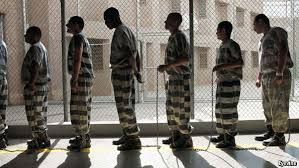
We are talking of one of the wealthiest countries in the world, where bail is rarely refused. Imagine what it must be like in less sophisticated societies!
- If you can’t pay bail, you likely can’t afford a lawyer, are unemployed and struggling to feed your family.
- If you are employed you will likely be fired and your family evicted from your home. In jail there is a high risk of assault and rape.
- You are exposed to hardened criminals and gangs who enforce their demands. You have limited contact with your loved ones.
Jail is an ugly and terrifying place to be.
The bail project is an organisation which pays the bail of those who are unable to do so.
- 96% of people sponsored in this way, return to face trial
- Over 50% of these cases are dismissed
- Less than 2% of those charged receive jail sentences.
Of those that remain in custody, 90% plead guilty, many just to get out of jail.
The criminal justice system is a cruel failure where most crimes are undetected and many innocents plead guilty to avoid prolonged incarceration.
What are the options?
Probably some subordination of individual rights to community interest as universal surveillance becomes the norm..
Can you see that getting through existing Parliaments in western democracies?

That is a topic for another day.

 Of
Of 




 The self-drive car whizzed off, covering the 10 km distance in 8 minutes, while I flipped through my voting preferences on the issues before e-Parliament.
 steak – the new worm algae protein meat barbequed magnificently and gave me a perfect medium rare. The Bar took a box of my tamarillos, pawpaws and apple chives in exchange.
 ces sufficient to supply the sixty-five families that now shared the Bahr Place precinct.


 But thinking about it more, I recall the Incwala holiday in mid-December in Swaziland – when the King was purified and the First Fruits were celebrated.
 Ōmisoka (大晦日)—or ōtsugomori (大晦)—is a Japanese traditional celebration on the last day of the year. Traditionally, it was held on the final day of the 12th lunar month.
 from Norse and Gaelic observances, including gift-giving and visiting homes of friends with special attention given to the first-foot, the first guest of the new year.
 Holly, ivy and mistletoe were used in celebrations of the Winter Solstice Festival to ward off evil spirits and celebrate new growth.







 We need a political Elon Musk who is talking about tours to Mars and travel from Sydney to London in under an hour. Someone who can use technology to create a political system that excludes blather, insult and delay and quickly brings about simple laws that regulate our society.




 in 2008, Sakoshi Nakamoto devised the
 metime last week Queensland news was filled with the successful busts by police of numerous marijuana growers who had rented suburban houses and converted them to grass growing hothouses. A number of serious statements were made about these heavy criminals.