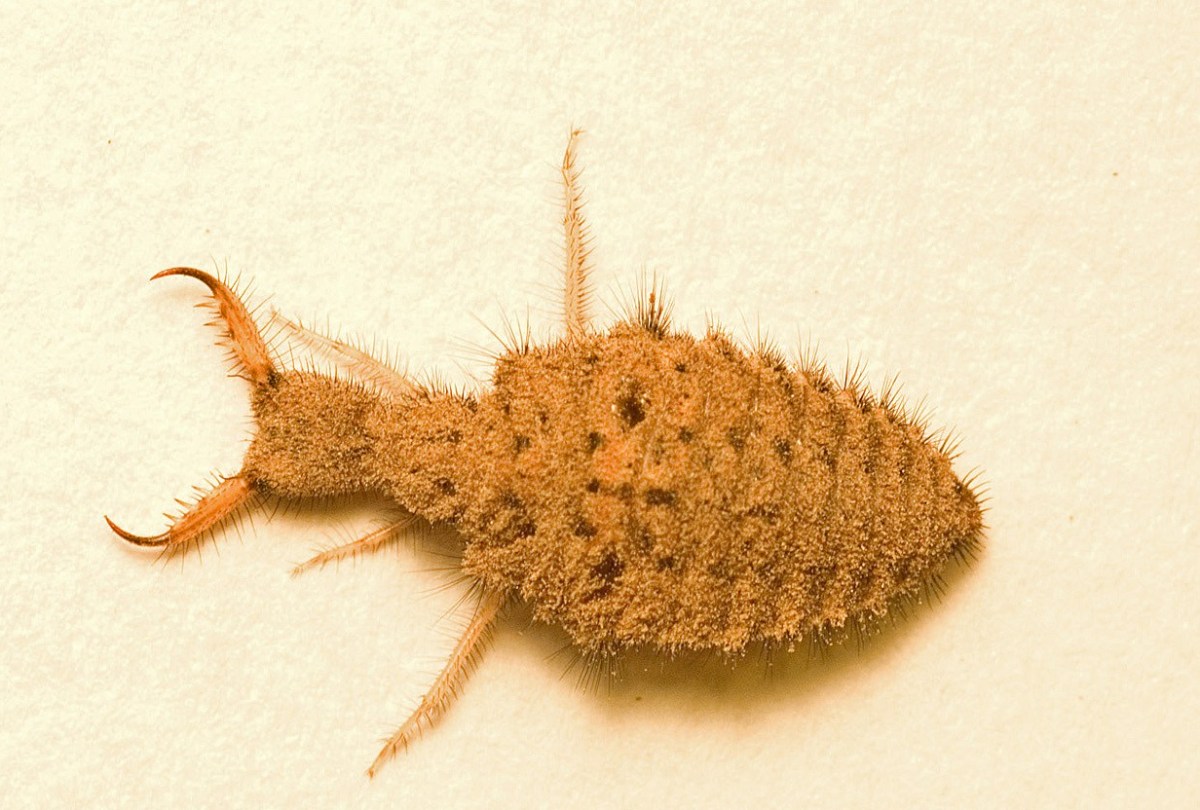
Tok tokkies

Story suggested by Susie Drake          Wednesday 10 March

I have always  had a little confusion about tok tokkies.

I knew they were insects but confused them with ant-lions, about which my elder brother is an authority. When he was about eight or ten he was sent to St Marks, a boarding school in Mbabane, about 75 miles from Stegi, which was home. He was in Duncan House and his best friend was Tienie Herbst. Sixteen years later I was in Duncan too and one of my classmates was Hennie Herbst.

My brother and Tienie kept ant lion farms. But back to tok-tokkies…
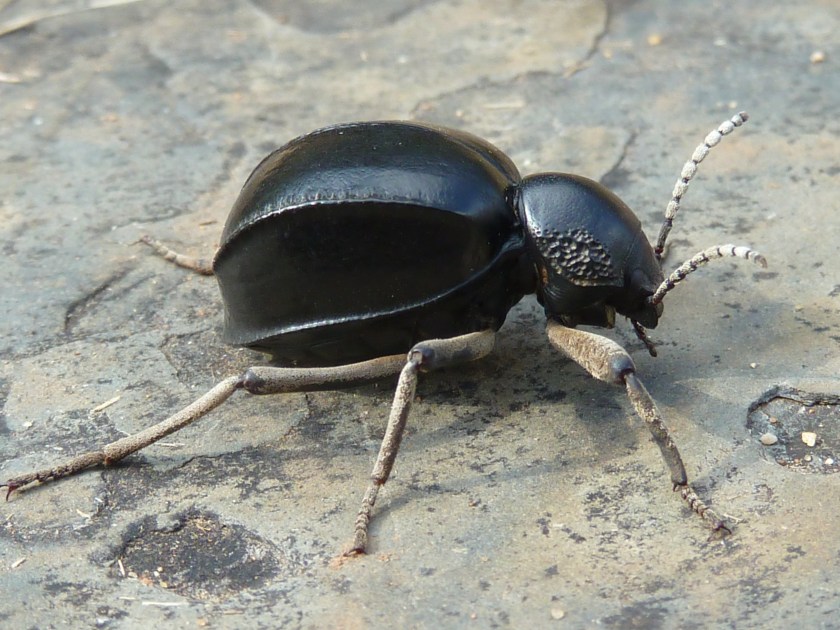
Tok-tokkies are clever beetles that live in the desert and collect moisture from fog. Darkling beetle is their formal name (Tenebrionidae if you want to be technical). 

They make a clicky-knocking sound to lure females. That is why they are called Tok-tokkies, after the children’s game of knocking on doors then running away.

I don’t think I have ever met a tok-tokkie beetle.

But I have met a number of ant-lions, which we called tok-tokkies, so I can tell you about them. They are fierce predators that dig pit traps for unsuspecting prey.

Once the prey falls into the trap, the ant-lion springs out from its cover and seizes a leg in its gruesome jaws and injects its venom. Slowly, inexorably, it drags the struggling prey under the sand and devours it.
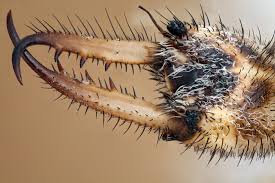
I can remember tok-tokkies from when I was in Duncan. I suppose they were the descendants of my brother’s insects. 

They are very entertaining and can keep one absorbed for hours. There were some pits in the sand, near the boiler where we went to smoke cigarettes.  If you tickled the sand of the crater with a grass stalk, the lion would spring out of the sand and grip it and you could lift it up to look at it.Even better was to get an ant and drop it into the pit. Quick as a wink it was goodbye Mr Ant.

To even the competition we got bigger insects, like a small hotnotsgod, a praying mantis. They could usually get away, but sometimes lost a leg.

After eating enough over a couple of years the ant-lion spins a cocoon and retires into it for a while. When the moon is full, it emerges as a delicate lacewing beauty who flies off in avid search of a mate. Her search is frenzied and relentless without pause to even eat. Once mating is over, she lays eggs in the sand, and dies.
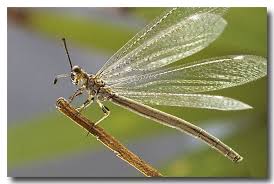
Talk about Beauty and the Beast

Just imagine if there were giants of the species …. aarghhh!!

The Green Hand of Overdale

Story suggested by Keith Struwig 8 March Monday

The little boys at our boarding school, juniors ranging in age from seven to twelve, lived in Overdale House. They were under the care of a young Scotsman who was diligent but strict in his exercise of care.

Each morning the prefect awoke the boys with a little bell. No lolling in bed was permitted. All faces were to be washed in cold water (there was no hot); shoes polished, hair brushed, beds made before breakfast. Their appearance and clothes trunks were inspected. Then they were marched off to breakfast.

The housemaster ensured that the senior boys allowed them to get some food at meal times, but like all boys, they were always ravenous.

Every second night they were marched to Duncan House for a bath. On the intervening day grubbiness and dirt were to be removed under the cold water tap at the back, in the shade of the oak trees.

Lights out was at nine o’clock, with only the prefect’s light left on until later. The toilet was an outhouse, under the oak trees and it was very dark out there. But little boys were well aware of the horrible embarrassment and miserable disgrace awaiting those who wet their beds… so braved the dark.

Unfortunately, an idle, wicked prefect, who shall remain nameless, was struck by a brainwave.  He knew how to stop the littlest boys waking him in the middle of the night to take them to the loo, which he was under instruction to do. 

One winter night, just before lights out, he idly inquired if anyone had heard anything the previous night, like tapping on the window. No-one had. He admonished them all not to investigate if they ever did hear it. 

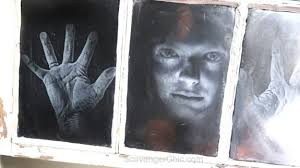
It could be “the hand” that was tapping…. 

He said he had been told by Sikwini, the Head Waiter, that many years ago, a man had slipped and fallen into the saw pit and his left hand had been sliced off. He was rushed to hospital but bled to death on the way. His hand had been forgotten in the panic and it is thought that Fly the school dog had stolen it. 

Now, it was said, usually at full moon the hand came to find its owner….

Boys were dumbstruck and everyone of them slept with their head under the blankets. No-one woke the prefect. 

Over the following days, any visits to the outhouse after dark were done before lights out, in company of at least two others, who took turns to wait outside while business was completed. Nobody moved after lights out.

Inevitably there was a sudden increase in incidents of bed-wetting, surprisingly including one or two older boys.

The canny young Scotsman conferred with the Matron (soon to become his wife) and she spoke to some of the younger boys. She soon extracted the legend of “the hand”, which had now become green and “scrabbled at the tops of windows and would strangle anyone who saw it and they would become ghosts of Overdale too….

Once such terrifying seeds have been planted, they grow unchecked and become rooted, despite pronouncements from the housemaster and the matron and a recant by the demoted prefect.

That is why, until Overdale was no longer a dormitory, chamber pots were used at night.

Everyone who was a boarder at St Marks knows the story and the duty monitors who fetched the cocoa at night always gave Overdale a wide berth, especially around full moon.

Conversation with a hyena

Story proposedby Tom Purcell Friday 5 March

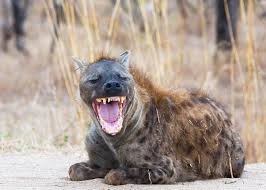
Hyenas are as clever as they are ugly. It is reported that they are cleverer than chimpanzees which probably means cleverer than a lot of guys with whom  I played rugby. They are also meaner than junkyard dogs and hippos with toothache.

Contrary to popular belief, hyenas are not cowardly animals. The smaller ones who are scavengers might be shy and cautious but they fiercely protect their interests if threatened. A bold strategy of the spotted hyena is to lock on to the prey’s testicles and hang on until the victim bleeds out. 

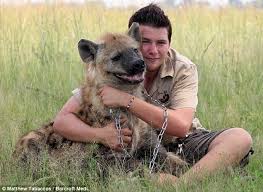
However, if you ever sat down and talked to a hyena, you would be amazed by the variety and self-deprecating humour of the conversation.

That’s one thing about hyenas, they giggle quite a bit. So you giggle too, because its probably a good tactic – their jaws can crack a giraffe femur and they are a bit temperamental (with the emphasis on mental).

The other thing is: don’t mention the smell around hyenas. They have scent glands around their anus and are continuously wiping their arse on grass to tell you they’ve been there.

If you are determined to talk to a hyena it is probably prudent to first get to know the aardwolf. They are the gentlest of the species and usually eat ants, so you should be quite safe. Like most hyenas they sleep in the day so remember to seek them out after dark . Nothing like waking a grumpy dog for a chat, or anyone else for that matter.

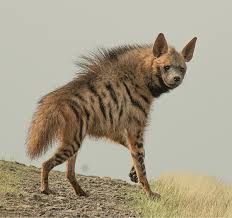
The smallest hyena is the striped one and he is very shy and misunderstood and reportedly endures significant bullying. However it is the national animal of Lebanon.

It is perhaps wiser to seek conversation with the male spotted hyena. Males are generally more affable and smaller than females, who are always leaders of the pack. In fact males are at the bottom of the hyena caste system and will probably talk to anyone who shows remote interest in them.

Like most females, lady hyenas (respect goes a long way) have complicated anatomies. When I investigated this I skipped a great deal as it was eye-wateringly uncomfortable sounding.

Apparently the spotted hyena’s extraordinary sexual equipment remains “one of the most interesting mysteries in biology.”

It seems lady hyenas have plenty to be bitter about.

Save to say that they were thought to be gender fluid hermaphrodites but closer observation disclosed this was not so. Perhaps they could be adopted as a mascot of the less certain citizens of the LGBTQ rainbow?

Some people seek out the company of hyenas, so they may well be good company

Probably the best  topic for conversation with a hyena is food. It may be wise to only raise this after a meal, as if the conversation becomes too descriptive they might get hungry. Hyenas can and do take down buffalos so a well fed human would be a piece of cake.

Oh crumbs!

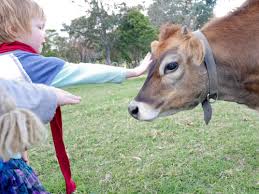
Patting a cow for the first time

for Max 3 months old 3 Mar Weds

Cows are friendly critters. 

They will remember you 

Mind you, there are cow pats and there are cow pats. You can pat a cow, but don’t pat a cow pat. Ask your Daddy to tell you why.

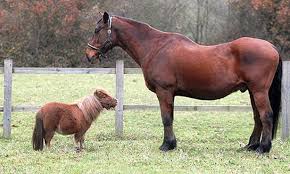
The first time I remember patting a cow was at the Hennessey’s dairy farm. They had a herd of Jersey cows and a few Shetland ponies.

First I will tell you a bit about these ponies. They are very small which is just right for little people to ride. Some can be bad tempered and some can be sweet.

When I was about seven years old my parents gave me a Shetland pony for my birthday. Her name was Sweetie. I will tell you why that was not a good name for her. 

Mum had invited all my friends to a birthday party for me. Even June Rose who had lived next door to us in Bremersdorp was there, looking very smart in  a bonnet and a frilly dress. She was only five.

The best thing about the party was that we all got to have a ride on Sweetie. Everybody was thrilled, except for one person. That person was Sweetie, who was not happy to have to carry lots of little children around the garden on her back all afternoon.

So, she had a huff. 

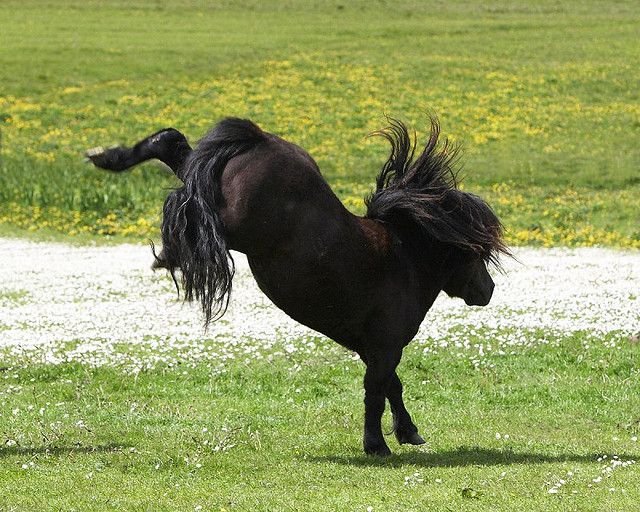
When ponies have a huff, they toss their heads, then jump forward onto their front legs and throw their hindlegs up into the air. If there is someone on their back, they get tossed off, over the horse’s head to crash down to the ground.

Poor June Rose, she landed in a rose bush and got quite badly scratched. That really spoilt the party. 

Sweetie was sent back to Hennessey’s farm, which is I suppose what she really wanted.

I always thought it was weird that June Rose was bucked off in the rose garden. Perhaps if her name was Daisy she would have been tossed into the daisies?

Anyway back to the cows. Jersey cows are a soft beige brown colour and have big brown eyes and long eyelashes.  They have big udders which give lots of milk every day. 

The farmer showed us how to milk a cow, after we had patted it of course. Cows like being patted and if they know you well enough will give you a big kiss. A cow kiss is a lick across your face!

Its not that difficult to milk a cow. You squeeze one of the teats on the udder and warm milk squirts out into the bucket under the cow. Sometimes the cow stamps her foot  and swishes her tail because she doesn’t like flies bothering her.

We gave some of the milk in a bottle to a calf, which was very sweet with big brown eyes too. It wanted more and sucked and sucked and moo’d  very loudly.

We patted its head and scratched its ears and it seemed to like that.

We didn’t want to go home, but the farmer said the calf had to go to the barn to sleep as it was getting dark.

It was lovely day – we got to pat a pony, a cow and a calf. We also patted the farmer’s dog and his cats. And he gave us a bag of big forest mushrooms called makhowe  to take home for our supper. 

Cradle Rock

Story proposed by Tim Jackson Mon 1 Mar

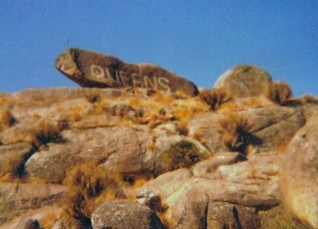
This singular hard rock formation can be seen as an icon representing the ethos of St Marks School in the 1950’s and early 60’s.

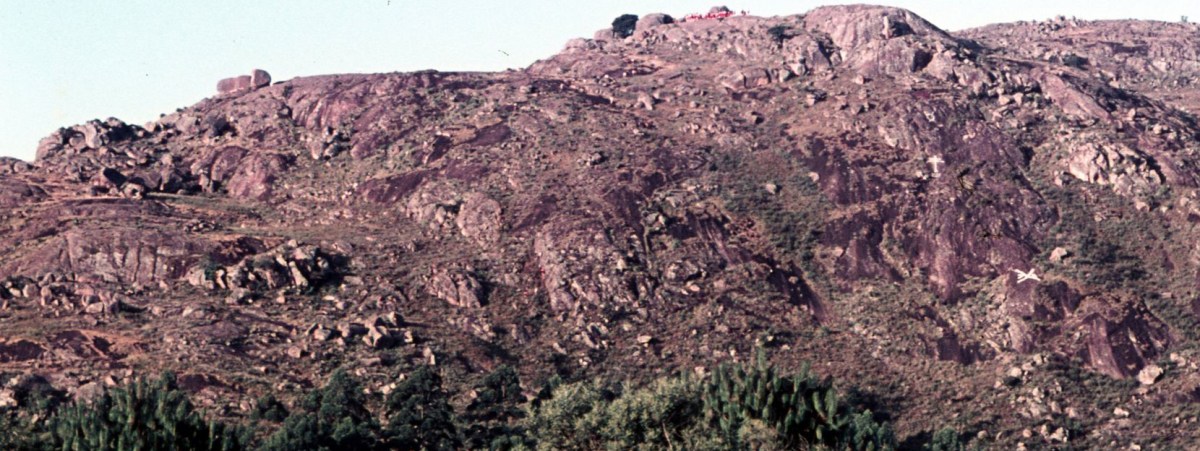
The cluster of large granite boulders near the top of a steep slope, looked like a cradle. It nestled on the mountain in full sight of the school, a daily reminder of the challenge it posed every year.

St Marks was a small school with the boarders comprising the majority of pupils. Day bugs made up about a quarter of the school and were generally regarded with a slight sneer by boarders, who had no doubts that they represented the core and backbone of the school.

In keeping with the times, discipline was severe: corporal punishment for boys was administered by the Headmaster and his Deputy, all housemasters and prefects and sub-prefects. One had to be very diligent and careful not to commit some infraction incurring cuts – strikes with a cane, coathanger or in some cases a cricket bat.

Early morning runs in winter and swims in summer were compulsory. As were the cross-country runs after school in summer – about 4 miles of dust, then mud. If you were slow you had a very muddy bath. 

But the real glory was a test of toughness, witnessed by the whole school. It was  a fast cross country scramble across the valley through a gum forest, up the rockstrewn side of Malunge mountain, to seize the cup, placed on top of Cradle Rock.

All boys took part and points were awarded to your sports house depending on your time. To gain points you needed to complete the course in about 20 minutes.

We all ran barefoot in those days, helter skelter down from school, over the golf course bridge, then a choice had to be made. Either shorter but steeper and rougher, straight up through the trees and over the rocks, or around the side on the road past Jimmy’s Pool, then striking right up the hill, longer but faster. 

Michael Connolly won in ‘64 and Mapipa Long in ‘65. I believe the record time was about 14 minutes.

In the mischief and mayhem after year end exams and break-up day, some gentlemen who remain nameless, climbed the mountain under cover of darkness.

There they beautifully enhanced the front facade of Cradle Rock by painting in large white letters “Queens”.

Just in time too, as in 1967 the sports house was re-named Taylor to honour Miss Tilly Taylor, who had served the school for over 20 years.

The Cross of Lorraine, from our school badge, was painted large on the vertical rockface a few hundred yards away on the  same mountain, after Gordon Highlanders painted their badge there.

Those are some memories inspired by the Cradle Rock .

The paint on the rock has faded now and most of the trees are gone; there are houses quite close. But Cradle Rock endures.

(* To see a photo of the view of the rock taken from the school, go to the webpage by clicking the Title)

Photo courtesy of Mike Ellis, of course!

Farouk – Floppy and Fearless

Story proposed by Amory Cobbledick  

The names of our pets reflect the world at the time of naming. So when my Shetland pony, Pikkie (Afrikaans for little one) had a foal, my father christened him Timoshenko, after a World War 2 Russian General.

Our neighbours in the late 1950’s, got a dog and he was christened Farouk. I assume something about this large bull mastiff must have brought to mind His Majesty Farouk I, by the grace of God, King of Egypt and the Sudan.

The name means “the one who distinguishes between right and wrong”. Not a good name for this dog who struggled to make that distinction; nor I believe, could his namesake.

 Farouk was of 10/16 Circassian 3/16 Turkish 2/16 French and 1/16 Albanian descent – in other words a real mongrel. Ruki, the name we called the dog, was pure-bred, but also behaved like a mongrel.

The Bullmastiff breed was bred to tackle and pin a poacher that comes onto private land which was sometimes awkward.

Ruki was also called Slobber Joe on account of the copious saliva slobber he produced. This young dog was very big, undisciplined and randy – he tried to knock down any running thing – and then he would mount and hump it, which could be embarrassing or hilarious, depending on your viewpoint.

It happened frequently to all of us. I can remember being paralysed with laughter when it happened to others and absolutely mortified when it happened to me.

Invariably, the subject of his affections was covered in slobber. He also hated horses but was otherwise quite friendly stupid.

While talking about dogs and embarrassment, I will share an agonising experience, if you promise not to tell. Sir Brian and Lady Riva Marwick came to say goodbye to my brother Tim and I at our boarding school, St Marks. Sir Brian was the retiring Resident Commissioner of Swaziland and an old family friend. As briefed, we were waiting, polished and clean in front of Duncan House, when the Austin Princess with fluttering flag rolled up. We could hear the whispers and scuffles of the boarders peering through windows and doors.

Sir Brian and Lady Riva alighted and bade their adieu’s and we blushed and mumbled. Just then Fly, the school mongrel arrived to see what was going on. Unbeknown to His Excellency, Fly cocked his leg and piddled against his tall grey flannelled leg.

Immediately Tim and I gasped and snorted and squirmed and bit our lips; while the audience erupted in poorly suppressed giggles. It was sheer agony.

Fortunately Lady Riva had seen what had happened and hustled him into the car and away. Oh dear! That was extremely painful and funny.

My Dad’s dog Bessie, a red bull terrier kept us in line: she was patient and wise and more sensible than any of us.

Sometimes on Sundays, we would go on a hike into the mountains around Mbabane, taking Farouk and Bessie to look after us.

Mum wrapped tomato sandwiches in greaseproof paper and we would take Daddy’s army haversack and water bottle and off we’d go climbing the hill behind the Police camp. Bessie would lead the way and try to curb Ruki’s exuberance.

We must have made an inspiring sight: three small barefooted boys in large hats accompanied by a towering mastiff and led by a grey muzzled bull terrier.

One terrible day, we met an old grey horse and Farouk went for it, leaping up and biting its throat.

It galloped off bleeding from the throat and we fled. We heard it was found dead and lived in terror for many days…

I don’t recall any other adventures with Farouk, so maybe he was moved to an area where there were no horses and people didn’t mind being knocked over and humped!

I also cannot think of that dog without a grin!

Eating litchis

Story proposed for my grand daughter, Elba Rose, 3 years old Tues 2 March

It appears that some people spell and pronounce the word as lychee (ugh!) 

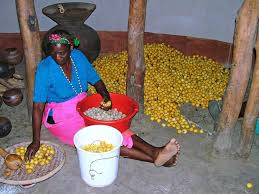
The litchi is a member of the Soapberry family, but should have been classified under sugarberry. It is a small juicy, deliciously sweet fruit. Accordingly a number need to be eaten at a time.

Delicate people choose to pierce the thin, slightly spiky skin with a knife and peel it off with their fingers, thereby losing most of the juice. For a number of good reasons, I just bite into the skin.

That way, if you simultaneously slurp, you get most of the juice that explodes from the fruit. The rest runs down your chin and neck. I have got used to that and shower after finishing as many as I can eat.

Once the skin is pierced and the first juice splash slurped, delicately peel off the top half of the skin shell with your teeth. Then squeeze the bottom half with your fingers and the fruit pops into your mouth. Savour the soft sweet flesh, then bite softly to the hard smooth pip in the centre and peel off the flesh which can be swallowed without hardly any chewing necessary. Discard the pip and the peel after ensuring any remaining juice has been slurped.

We had great pleasure introducing my daughter’s well brought up young Englishman to litchis.

He is highly observant if somewhat hasty, as young men can be. He skilfully mimicked my bite and slurp with a masterly tilt of the head and salacious slurp. To our surprise and glee, he then chewed and swallowed the pip! He had been too shy to ask, and just assumed!

 It was also the favourite fruit of a Chinese Emperor’s favoured concubine. The emperor had fresh fruit delivered from Guangdong to the capital at great expense by a special courier service with fast horses.

A man’s gotta do what a man’s gotta do!


 Litchis contain several healthy minerals, vitamins, and antioxidants, such as potassium, copper, vitamin C, epicatechin, and rutin. These may help protect against heart disease, cancer, and diabetes.

The pip may be slightly poisonous. 

My eldest brother, Mpunzane is a litchi addict. Whenever he noticed a litchi tree in fruit in his suburb, he would send in my brother and me under cover of darkness, to liberate a sample of the fruit. After some close calls and an attack of conscience (our mother’s), he planted a litchi tree in his garden. 

In those days he didn’t have Google to tell him that the trees bear fruit in about three months. Somebody told him it took seven years. We would be taken to inspect the tree each year. It never yielded any fruit, until it was seven years old, at least twenty feet high and wide. After good early rain it gave rise to a myriad of fruit flowers, then cascades of fruit started developing to everyones’ joy.

Yet, no ripe fruit survived. Until on a visit, I awoke very early one morning and went for a walk. I heard noises from the tree and went to investigate. There was the gardener hauling down branches and plucking the fruit which he dropped into a sack. 

To cut a long story short, he had been doing this every year, hence no fruit, since year one.

Well now,  with the thief gone, we could look forward to a harvest. We left them for a few more days to ripen perfectly. The evening before thay long awaited, glorious first harvest we heard an ominous sound – the happy call of a vervet monkey. We rushed to the tree and 30 monkeys scattered. The ground was littered with fruit peels and pips. The total harvest was 17 fruit – the monkeys and thieves got the rest – every year.

That should tells you something about the joy of eating litchis.

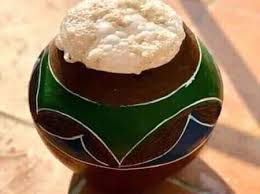
Umqombothi

It’s a lovely word. The ‘qo‘ just rolls of the tongue onto the roof of your mouth with a soft click and the next ‘o’ comes out as ‘aw’: oohm tk awm baww tea

It is the chicken noodle soup of South Africa especially in the Eastern Cape.

It is brewed for special occasions. For young Xhosa men (abakwetha) the introduction to umqombothi is usually painful. It is brewed to celebrate their initiation to manhood, which involves isolation and circumcision. I have never drunk it.

Beer is of course a staple of most civilisations, essentially because back in the day local water supplies soon became contaminated by poor sanitation and livestocks’ lack of regard for water purity. The alcohol in beer killed most of the germs in the water and the grain was extremely nourishing. That is why most wise people like beer – they are survivors.

In Africa where my soul was born, there are a number of natural brews of which probably the most popular is mahewu because of its simplicity. It is essentially ingrained into the rural dweller’s life and is shared communally. Both these drinks are grain based and only mildly alcoholic.

However, as has no doubt been experienced recently in South Africa, where alcohol sales were banned in the Covid lockdown, people go to great lengths to make alcoholic drinks.

I can remember my father warning me never to drink home brewed shebeen beer, makanjane, as brewers often added dubious ingredients to improve the ‘kick’. Such ingredients included methylated spirits and battery acid, as well as dead rats…. Mind you there is a pervasive myth that the secret Guinness ingredient is a beef hindquarter!

The brewing of pineapple beer was part of the unofficial curriculum for most young schoolboys: pineapple peel, brown sugar and water buried in a jar for a few days!

Once when I had mumps and was in bed upstairs in our house in Mbabane, my brother Mpunzane remembered a jar he had buried and forgot about when he went off to boarding school, three months before.

When he loosened the soil above it, the jar exploded, shooting the lid into the eaves outside my room. Impressive brew!

I think that was when we got the warning from Dad.

Mpunzane, who became a beer rep for a while, tells me it is marula season in Swaziland and he has plans for for some muganu – marula beer to celebrate his 80th birthday.

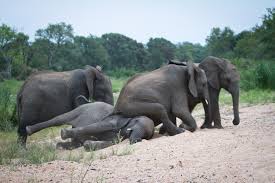
Those of you who have seen elephants and baboons staggering about after eating rotting marula fruit, will know that a potent beer is possible.

If you are totally teetotal in rural Africa, your other and probably only alternative is amasi, which is yogurt before it was invented.  

Sorry for you!

Story proposed by Mike Ellis

Middelmannetjie Mania

43 hours since lift-off from Musk City on Mars. The rocket’s cameras revealed the desolation of the Serengeti Plain in Africa; the sensors displayed almost zero oxygen and a surface temperature of 67 degrees Centigrade. There was no sign of life.

‘Mythbuster’ C-well had returned to the planet that his ancestors had abandoned in the 21st Century, days before the apocalyptic finale of the nuclear war between China and the United States. All known animal forms of life on Earth’s surface were believed to have been eradicated. This was his last chance to prove life existed on his ancestral planet.

His Martian colleagues in the LifeForm Ministry had scorned his conviction that some forms of life had survived the radioactive blasts and heatwaves which scorched Earth for decades. However, his persistent searches of Earth images over time had detected some remnants of vegetation. It was this evidence that persuaded MarsGov to fund his exploration.

The transit vehicle went into Earth orbit at 300 kilometers and C-well (call sign MbC) entered his drone with his technician and co-pilot Vingers Verranti (VV2). Their destination was the junction of the Mlawula and Black Umbuluzi Rivers near the border between eSwatini and Mocambique.

Many years before MbC’s great grandfather Jaime had been an Ecologist and Game Warden in the region. He had left annotated journals of the animal, plant and insect life in the area. This was the reference material which was to guide their search.

Jaime had affectionately been called Malusa Timfene by the locals, – guardian of the baboons, because of his diligent protection of the ecology of the region.

They had sufficient oxygen and battery life in their suits for 36 hours, before they would be forced to leave or die.

The drone blew up a cloud of dust as they landed. They descended and stood in the shade under its wings. They would search  a roughly square area sided by the Umbuluzi in the North and the Mlawula on the East and South. A dirt track formed the left boundary of the search area.

A few leafless trees seemed just alive in the river beds, which had some wispy grasses growing on the banks.

Every footfall raised a puff of dust, There were no animal tracks and no birds in the sky. MbC felt like weeping, having read of the abundance of wildlife in the area.

In the first 30 hours he must have traversed his section of the area over a thousand times without observing any vestige of life on his monitor gauges or through his magnified, wide angle spectacle visor.

He was growing despondent.

When he looked up he saw VV2 watching him, then breaking into a space age version of the sibhaca dancing they had seen on archive movies. That brought a grin and new energy. VV2 looked like a giant armoured insect capering about.

That brought something to mind from the old journal. Jaime had written in his journal of the plethora of insect life which inhabited the grasses and shrubs that grew in the middle of the dirt roads – known as the middlemannetjie – the little man in the middle.

He had described a life chain starting with the antelopes that slept in the roadways at night, marginally safer than the grasslands as predators could be detected and escape at speed was easier.

Their droppings had fostered a myriad of insect life from carpenter ants, millipedes, ant lions to dung beetles. Those patient, diligent, comic beasties that rolled dung into balls in which to lay their eggs.

He returned to the side track and increased the magnification of his visor to examine the dusty surface.

There were still a few brown grass blades emerging from tufts of stubble in the middle of the road. He gasped! There was a faint double line of dots in the sand – insect tracks! He whooped and VV2 came lumbering over to see what was the cause of his obvious glee.

They searched wider and found more tracks and near the river, bigger insect tracks, somewhat more erratic, leading to a stunted shrub.

Under a root they discerned a round ball – it was a dungball. It had apparently been cached by the female.

Dung meant animal life!

Such joy – MbC’s persistence was vindicated!

As resources were dwindling, they were forced to return to Mars. No further evidence had been found, but the dungball would justify larger expeditions and maybe the re-colonisation of Earth.

MbC’s thesis was published to great acclaim on Mars.

He had entitled it: Middelmannetjie Mania.

Story proposed by James Culverwell

Do white lives matter?

Have you heard of Senekal in the Orange Free State?

A young farm manager in the district was beaten to death and his body was hoisted on a pole in his fields by his murderers, who were stock thieves.

“… he was tortured to death. All his bones were broken. He was cremated. He was not even buried”

Over a thousand local farmers, gathered outside the Magistrates Court where the alleged murderers were to appear after arrest. The intent was to register strong protest, but things got out of hand. A Police official was manhandled, shots were fired and a Police vehicle was toppled and torched. Ho hum …. just another of many similar incidents in the world today..?

One slightly different aspect was that the farmers were all white people and the alleged criminals, Police and other officials were nearly all black people.

Many white farmers have been murdered in South Africa leading to claims that it is a politically targeted genocide. This is a topic kept burning and aggravated by the white right wing.

For years white farmers have said that they are under siege, being killed on their properties – seemingly without much state intervention.

The government’s response has been that crime finds its way into everyone’s home (which is true). And that they are doing what they can to fight it ( but farmers keep getting murdered).

Statistics suggest that the majority of victims of crime are black. Black people are the majority and are disproportionately exposed to some of the factors that fuel crime – inequality, poverty and unemployment [1]. Unemployment is estimated to be over 42% (Bloomberg).

Most large farms in South Africa are owned by white farmers. They often have large homesteads and numerous employees. The homesteads are remote and the trappings of apparent wealth must be tempting to the destitute, desperate and criminal.

South Africa is a tale of two countries and it does not take much for problems to become tribalised. It is a sign of the tensions that are always simmering just beneath the surface.[2]

After all, apartheid was the crucible where identity politics activism gained legitimacy and momentum.

Is this gruesome murder not another George Floyd type moment? A minority group claiming prolonged targeting and victimisation by an oppressive majority.

Will we see the BLM and Antifa activists come out to join the next protest – maybe they will mimic Seattle and take over the city centre of Bloemfontein?

Somehow I doubt it – in the twisted rationale of the Identity politics creed, white is wrong and black is always the victim….

So real outrage notwithstanding, the fact that it is expressed solely by whites undermines the legitimacy of the protest and presents a threat to the delicate balance in race relations and government’s ability to balance conflicting demands.

Alarmingly, these protestors expressing their genuine outrage and fears are likely to be leveraged by those on both extremes of the political spectrum seeking confrontation, which will serve their political interests.

Sadly it is not the virtuous outrage and exercise of democratic protest that will be seen, but the similarities to white lynch mobs of the Deep South US in the last century and the armed anti BLM protestors more recently…

The South African Police have never been known for their skill and subtlety in controlling mass demonstrations as Sharpeville and Marikana amply demonstrate.

We must brace ourselves for tragedy.

If the next protest included black farmers and black employees it would not be discounted as a protest of a previously privileged class bewailing discomforts long suffered by most of the rest of the population.

It is past time that all South Africans realised that they are a community, not parts of a community, each with different views of history.

Instead of looking back in anger, look forward with resolve.

I’ll say it again! All lives matter!


[1] https://www.bbc.com/news/world-africa-54441374

[2] Ibid