Soutie

Those of you with African origin will understand the title.

“Soutie” is a derisive Afrikaans name for an English speaking South African. It is an abbreviation of the crude term soutpiel or salty prick.

Many Afrikaners were of the opinion that English speaking South Africans retained one foot in Britain and the other in Africa. As this resulted in legs far apart, it caused the salination of the dangling nether regions.
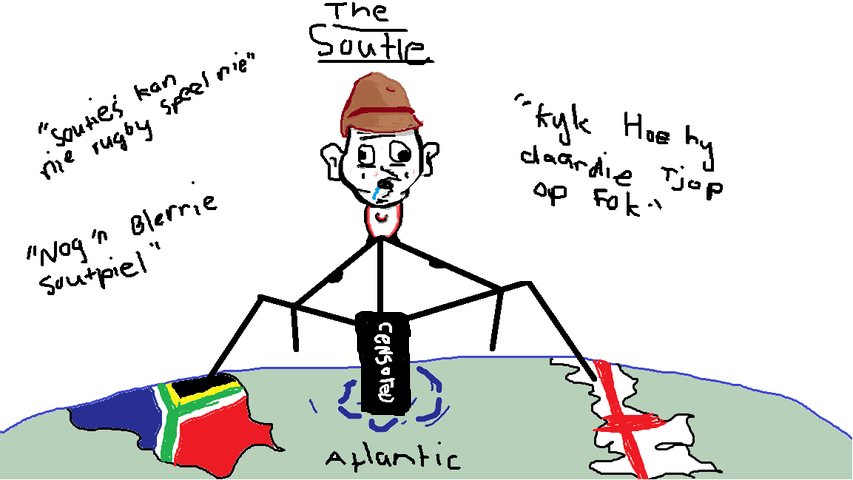
I confess that there may be some truth in their assertions

I have just returned from a sojourn in the land of my birth. eSwatini is a landlocked little kingdom in Southern Africa. My brothers live there, on a farm in the bushveld. The eldest, Mpunzane, has late stage Parkinson’s, so the visit was bitter sweet. My wife is in Nelspruit with her sister who has cancer.

Not a fun visit.

Seedy, run-down, dirty, busy, rural houses like weeds in every space, no plan just build.

Too many care less officials and fat police officers. Road markings gone, potholes, beggars, some traffic lights.

Poor but friendly.

Lots of curled lips and curses about the fat, greedy king. Nobody seems to like him, but see his cultural role as still important.

Almost felt like home ….. but not quite.

We are OzAfricans now, settling well in the South Pacific.

This is an untitled poem in Afrikaans by Lidi de Waal, a poet and artist fom the Western Cape in South Africa.

I find Afrikaans to be a wonderfully expressive language – translation below

{*The poem was untitled – this is my title for it)

Where to find happiness *

die lewe is te kort daarvoor

om geluk elders te bly soek

of om daarvoor te bly sit en wag

geluk is nie iewers anders nie

dis nie in ń ander dorp

of ń beter blyplek nie

dis nie in volgende week of volgende jaar nie

dis nie by ń ander partner

of beter vriende

of ń ander werk nie

geluk is hier waar jy is

geluk is in die vrede binne in jou

in die klein stukkies vreugde

wat soms in jou eie hart opwel

life is too short

to seek happiness elsewhere

or to sit still and wait for it

happiness is not somewhere else

it’s not another town or a better home

it’s not in the next week or the next year

it’s not with another partner or better friends

happiness is where you are

happiness is in the peace within you

in the little bits of joy

which occasionally well up in your own heart
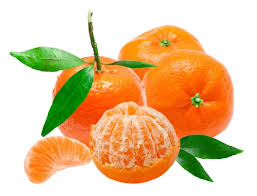
 

Naartjies

I am sentimental, I know… but I can’t call them mandarins.

It’s like barbeque is not the right word and I think that those who say it are ‘n bietjie skeef!

For some reason, I have always felt that naartjies are quintessentially South African. I am quite happy for non-Africans to call a similar fruit mandarins … they aren’t really naartjies.

The thing about naartjies is they are so easy to peel and the peels are so bright and pretty they don’t really matter when discarded on the roadside.

They are lekker sweet and it’s easy to eat a whole bag without thinking.

The current Lions Tour prompts a memory from schooldays. Our Rugby coach and Geography teacher was an Irishman, Rick Hamilton, from Ulster – a surprisingly nice man notwithstanding. In 1968 the Lions played Eastern Transvaal in Springs. It was a mid-week game and Rick organised for the school First Rugby XV to attend.

It was about a six hour trip each way, so we had to leave early in the morning. The main manne sat in the back row. It was possible to duck down there and have a smoke if the windows were kept open. The masters sitting up front pretended not to notice.

I remember some of the songs we sang: She’ll be coming round the mountain (clean version), I am a rock, America, Sounds of silence, (Simon and Garfunkel were big then) Blowing in the wind, Catch the wind

We eventually arrived. Most of us were country boys so the big crowd and the grandstand were awe inspiring.

Standard rugby fare was biltong and naartjies. We had great admiration for some enterprising Springs High boys. They were slinging naartjies up over the back of the grandstand, dropping them on unsuspecting spectators from another school… Impressive!

Can’t remember the score but it was a wonderful experience, despite 12 hours in the bus. They had even kept some dinner for us back at school.

Eish Boet! It’s lekker to braai boerewors to go with mielie bread or mielie pap. Other than biltong and bakkie not many more words have followed us across the Indian Ocean. But there are a lot of Saffas in Australia! Last time the Springboks played in Brisbane there were twice as many more green jerseys than yellow ones.

Mind you, amongst fellow Africans there is a lot of kak praat and no-one gets gatvol.

Isn’t it astounding that South Africa produces so many world sports champions!

I believe Rassie has worked miracles in giving South Africans a common pride in their country. At last week’s rugby test against Italy in Cape Town, white supporters were a minority. I have never seen that before!

I reckon it’s something to do with a steady diet of biltong, boerewors and koeksisters!

In the bleak mid-winter

I sometimes feel a bit feeble and a little apprehensive that the phone will ring to say a dear one is dead, or worse, dying.

Those are some of the prospects of the downhill side of the age spectrum.

Of course, there are others.

My newest grandchild is 3 months old today and can count to 42 and speaks some Italian. I have another due in a month! My oldest grandchild is already ten and growing into a terrifying beauty.

Six sprouts to water with tears of pride and joy.

Our children are grown up and independent; indulgent of their sometimes unwieldy parent. The tick tock is inexorable and marches on at pace.

I am dismayed to find we have been in Australia for 10 years already, after 15 in New Zealand.

Yet, Africa still aches within me: its politicians infuriate me and the increased pace of the crumbling of the infrastructure sickens. But it is where most of my extended family are and a trace of guilt lingers: that I will not die there where 9 generations of ancestors died and my parents, 4 sisters and two brothers have chosen to die.

But my chosen home is a bright, comfortable place and we see the grandchildren quite often, but not too much.

There are still four more Ashes tests and the Rugby World Cup this year.

Who do I want to win? Australia for the Ashes of course; the rugby is more difficult: I am a citizen of Ireland and New Zealand and live in Australia but my playing days were in Southern Africa.

I think I may bet on the Irish but my heart will be with the Bokke.

Perhaps I should re-read Desiderata:

… in the noisy confusion of life, keep peace in your soul.

With all its sham, drudgery and broken dreams, it is still a beautiful world.

Be cheerful.

Strive to be happy.

Call me cantankerous

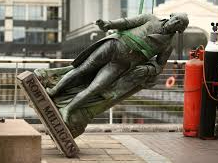
The statue of Edward Colston was toppled in a Black Lives Matter protest and tossed into a river in Bristol. He had been a merchant who amongst many other activities was involved in the Royal African Company which traded in slaves. It had been founded at the instigation of King Charles II in the 1600’s.

The slave trade was outlawed in 1807 in Britain and slaves were emancipated by in 1833.

Colston also supported and endowed schools, houses for the poor, almshouses, hospitals and Anglican churches in Bristol, London and elsewhere. He died at age 84 in 1721. A statue was erected in his honour.

A jury recently found 4 people clearly identified as perpetrators to be not guilty – they argued that the presence of the statue was a hate crime and it was therefore not an offence to remove it.

Perhaps statues of King Charles II should also be tossed? Perhaps it’s time to give the Queen and Royalty the heave-ho ? After all, their ancestor founded the Royal African Company.

If society does not allow the discussion of ideas and issues, people descend to shouting. Shouting is offensive and leads to confrontation. Those people who deny platforms to those who express opposing opinions and topple statues rely on the civilised reticence of the majority who will withdraw and avoid confrontation.

We have seen how demonstrators attack the police, deface buildings and defy regulations.

How far should they be allowed to go? What is peaceful demonstration?

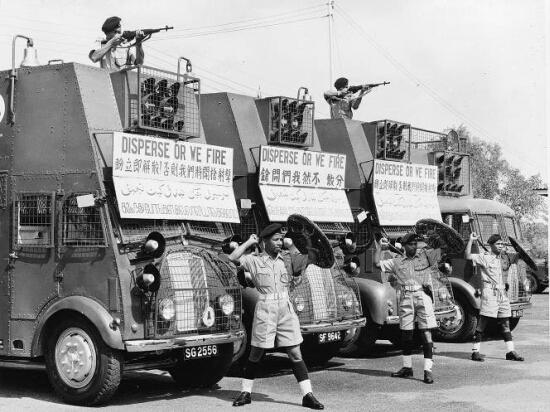
Not so long ago – in my lifetime, unruly demonstrators were orderered to disperse. If they defied these orders, shots were fired over their heads, if they persisted, ringleaders were shot by marksmen. That always did the trick.

Can’t say I fault the process.

Raison d’etre

Silly Socks on Friday started in Africa in the early 90’s. The blog followed in the early years of the 21st century

We stand for quirks and whimsy, and intend to take serious looks at silliness and silly looks at seriousness.

The rant is a favoured mode when things get my goat.

Our first campaign was a global war against that yoke of uniformity, the neck tie, now largely won. There can be no logical explanation why people continue to tightly tie strips of cloth round their throats and then dangle them on their chests.

Next on our list is a twin campaign to attack the plague of plastic and promote the global revival of hemp.

If this tickles your fancy, sign up as a follower and get an e-mail notifying you of new posts.

Please comment on what is written, especially if you disagree. Outrage is a validation of effect!

Against all odds

For purely practical reasons I am not a punter and if I do gamble I fully prepare to lose my money – I rarely win. If I do I get so exhilarated I blow the winnings on the next bet. I tend to bet on my gut feel; ’tis my Irish ancestors….

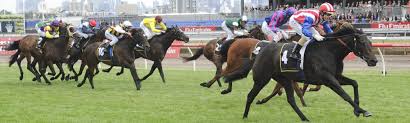
Just an aside before the main tale. For obvious reasons, I rarely go to the horse races: I usually can’t afford it and if I have some spare cash, I lose it quickly. Added to this is the fact that at the time I served on the bench as a magistrate in the city courts. As Dick Francis so well describes, racecourses attract shady characters with whom I should not socialise.

But the elements conspired against me. A friend had been given some complimentary tickets to the members’ enclosure. Now, this is quite swanky and has a fine view of the track, the parade ring and the spectators, as well as a well stocked bar. Rugby season was over, so what better way to spend a Saturday afternoon?

To cut a long story short, a man who I didn’t send to jail but fined heavily for repeated drunk driving gave me a tip, which I put a small bet on, not really trusting the source.

It cruised in at 10-1, so drinks were on me.

I should have sent him to jail. At a subsequent meeting he again gave me another tip and I bet half my salary – the bloody horse is still running….!

Anyway, what I meant to tell you about was an amazing stroke of luck in the middle of the Botswana desert. A group of us were on a fishing trip, travelling in two utes (Australian for bakkies) when I noticed a single wheel overtake us – it was ours!

We had sheared a half shaft. Fortunately we had an engineer with us. Engineers never travel without their tools, but no-one carries spare half shafts.

Unfortunately we were 170 kilometres from Gaborone and 120 from Palapye in the semi-desert of Botswana. There was little traffic.

Our engineer went off to Palapye in our other vehicle; we expected him back in 6 to 7 hours. We were not unduly worried about being stranded in the Botswana semi-desert.

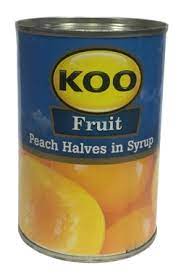
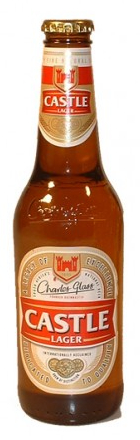
Our supplies were ample: a case of tinned peaches, a case of bully beef and eight crates of beer. We lay down in the shade to snooze (to avoid the temptation of starting on the beer…)

To our surprise, after less than an hour, we were roused by a beep beep beeep!

This is the part that is hard to believe.

About 20 minutes down the road, Peter, our engineer saw a cluster of houses just off the road and a tree with an engine suspended on a chain from a branch.

He stopped and inquired. When showed the broken half shaft, the man said “No problem” and led the way to an Isuzu bakkie, smashed up front. In 20 minutes they had stripped an identical half shaft, paid the man R200 and driven back to us.

It fitted perfectly! We went on to have a wonderful fishing trip.

Once back home the vehicle owner decided to order a spare half shaft, in case of another problem (he was an engineer..) There were none to be had in the Western Transvaal, nor Johannesburg ! Eventually, after a few weeks, a spare was sent from Cape Town!

Now what are the odds one could be found in the bush on the edge of the Kalahari desert?

Happy Hookers FC

We thought it was a quite amusing name for our venture. FC of course stands for Fishing Club, which in itself is quite amusing, as we weren’t really fishermen. Most of us were amateur birdwatchers.

It was an idle suggestion which bubbled up during a few beers at the club after work. Henties Bay came up and how renowned it was for fishing and now there was no longer a war in Namibia, it was safely accessible. It wasn’t long before somebody said “let’s go there”.

Initially, we were a Production Manager on a gold mine, two Personnel (HR) superintendents and an accountant, all over 40 and not exactly athletic. We invited some young fellows who were actually fishermen and full of energy who could do the driving and heavy lifting.

After weeks of serious planning meetings over beers at the club, we departed.

It was a long trip, almost 1800 kms and most of us had never been to Namibia.

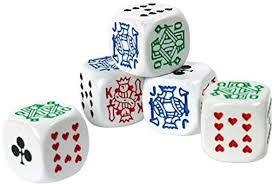
We travelled in two four wheel drive bakkies (utes in Australia) and those sitting in the back on our luggage, played long games of liar dice and slept a lot.

We had booked into a motel – no roughing it or camping had been one of our first rules. On arrival we prepared our tackle and planned what to do with our catches.

The next day, after breakfast, we drove to the area where the best fishing was to be had. No-one caught a fish all day. We retired early to drink beer and plan. The next day we went to Swakopmund to eat the legendary German Eisbein. The restaurant only had four left, so we had to draw straws. I lost and have never had eisbein since in protest.

The next day we drove out and saw an animated group of fishermen who were feverishly casting into a shoal of steenbras. We managed to catch two and a small shark. That was the sum total of our catch on the trip. It is a bleak country and the coast is covered in a fog belt, making everything grey.

Not a very succesful first trip, but we had quite a good time, drank some beer and there were no fights.

We decided that the next trip would combine fishing with birding. We travelled 1700 kilometers to Shakawe on the Okavango Delta in Botswana and had a marvelous time. We caught no tiger fish but bagged a few bream which we ate. The birdlife was wonderful.

The next trip was to Pafuri, 800 km away on the northern border of the Kruger National Park and the border with Mocambique. There was no fishing but the bird life was wonderful.

The following year, we went to Kosi Bay, only 780km away in kwaZulu. We saw quite a few birds, but caught no fish even though it was a legendary spot for grunter and kingfish.

It was hot, so we drank lots of beer.

At Morgans Bay on the next trip (about 900kms), two cold fronts passed over, so it rained the whole time. We only caught one small fish and we barbecued the squid and sardines we had bought for bait – it was wet, so we drank lots of beer

There was another trip to Pafuri as well.

All in all, we made six trips, travelling almost 14, 000 kilometres and caught at least ten fish.

It was, I believe, a very succesful association.

Fish after all are slimy and smelly….

who am I /who I am

Having been a taxpayer in five countries and a citizen of five, not all the same, including one in which I never lived, I sometimes ponder on the nature of my ethnicity and nationality.

My patronymic grandfather was born in Ireland and I believe is descended from 11th Century knights from Normandy, who assisted William the Conqueror invade England and later Ireland. They in turn were descended from Alaric the Visigoth, who trashed Rome.

Thus I am an Irish citizen by descent.

By naturalisation, I am also a New Zealand citizen and have been a citizen of Zimbabwe-Rhodesia, Swaziland and the United Kingdom and Colonies.

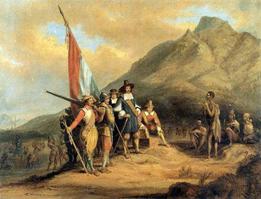
But I can’t really call myself Irish or Kiwi because I sound like a rooinek Japie from South Africa. My paternal grand mother is descended from Scottish Brownlees (landing in South Africa in 1817) and Dutch De Jagers (1697) – making me a 10th generation South African.

On my maternal grandfather’s side I am an Englishman descended from John Vialls of Orton in the 1600’s. My Gogo (grandmother) was descended from Danish and German settlers in 1700’s (perhaps Huguenots fleeing religious persecution?)

Now here’s a thing! Geni genealogy website tells me that I am directly descended from John Lackland Plantagenet, King of England following Richard the Lionheart, through both my father and my mother. Genealogy is a fascinating subject!

(No need to stand on ceremony, the occasional Milord will do).

So that is why why I support the Bokke then the Wallabies (I live there) and then the All Blacks, but Ireland above all of them.

Strangely I would probably never support the English!

Of course being white skinned and English speaking I am rejected by Afrikaner and black and brown Southern Africans. I have too many Afrikaner ancestors to be denied (at least 18 different Afrikaner family names in my family tree), but only a Timorese ancestor in the 1600’s to darken my skin.

I feel like a colonial mongrel, but I suppose at the end of the day, we all are!

Bird spotting in the Okavango

Story proposed by Louis Boshoff Thursday 25 March

We awoke early in the morning to a twittering, swirling flock of carmine bee eaters flying above the house we had slept in.

Can you believe the exhilaration of the birders in our party. We stood open-mouthed at our first sighting of this quite rare bird, certainly none were to be found in the Transvaal or Eastern seaboard that we knew.

Our safari had arrived at our destination after two in the morning and fallen exhausted into our beds, having been on the road since about 8 am the previous day and travelling over 1300km’s.

We were a group of work mates who had formed a travelling fishing club. Not for us the muddy dams and turgid rivers of the Western Transvaal – we wanted to get away from there. Not all of us were avid fishermen. Of the dozen or so of us, maybe two were real fishermen. Most of us were more interested in bird watching and beer.

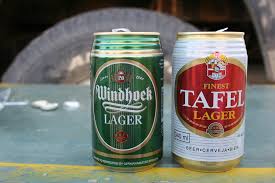
Our first trip had been an 1800 km trip to Henties Bay in Namibia. We hadn’t caught many fish at this legendary locale, but we had drunk Namibian beer, eaten Eisbein and had a great time.

This trip was to Shakawe at the top of the panhandle of the Okavango Delta. Two of our members were managers in TEBA the mine recruiting agency,which had recruiting stations in some of the most exotic places in Southern Africa. Each station had a well appointed, serviced guest house which often went unused for years at a time.

This station had two boats with which to navigate the river. The Okavango river was well known for tiger fish and delectable three-spot bream.

The fishermen pointed out that it was possible to fish, look for birds and drink beer while cruising the river. They were wise men! There was no dissent so we embarked after a sumptuous breakfast of scrambled eggs, boerewors and bacon, with toast and marmalade to accompany strong coffee.

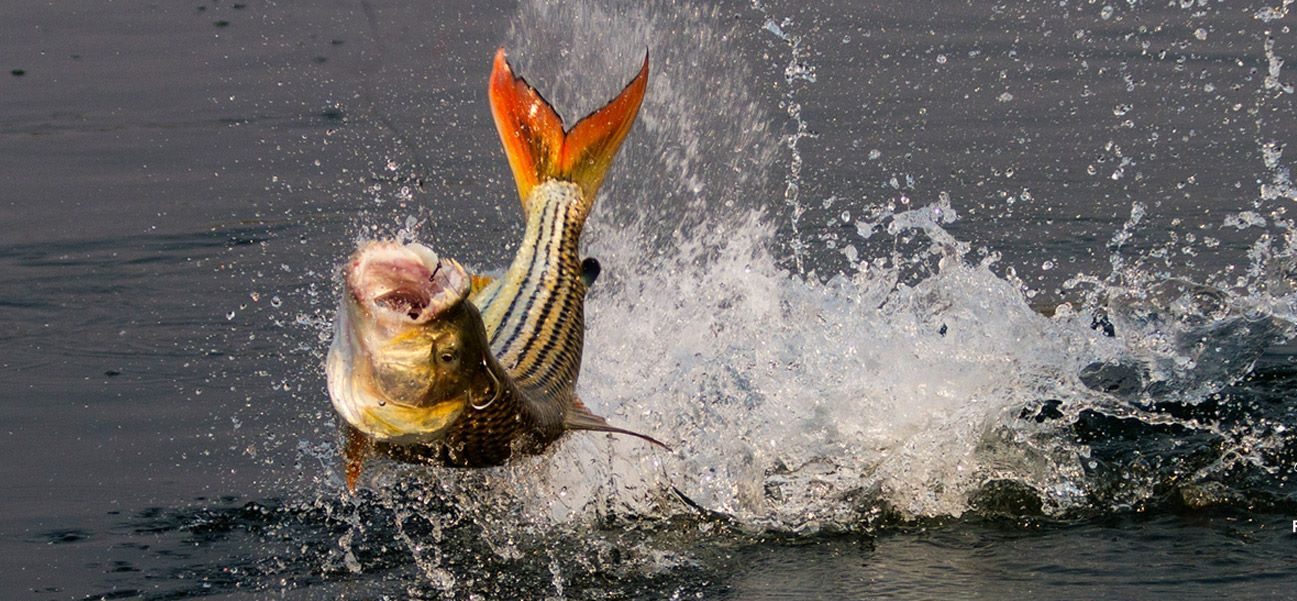
The river tiger fish is a worthy opponent and we lost many more than we landed. Once hooked they will leap into the air and shake their head violently. This is usually enough to shake free the lure which comes whizzing back at dangerous speed.

The river is wide and there were virtually no other boats other than a mokoro. On the papyrus islands in the river, large Nile crocodiles sunned themselves, slipping into the water if we got too close.

A first for us all was seeing African skimmers, fishing by skimming their lower beaks in the water. We saw their nests on sandbanks and had to slow the boat to avoid swamping them.

Fish eagles and kingfishers of all sizes abounded. As did the carmine bee eaters, which nested in the river banks. There were also European, Little and White fronted bee eaters. Birdlife abounds, so the birders were happy.

The fishermen were defeated by the tigers, so we adjourned to a local lodge for G&T’s. In the evening some fished for the legendary three spot bream and caught enough for supper. 

Over our three days there were nudges from crocs and charges by hippos and lots of laughter. The only bird we missed seeing was the Pel’s fishing owl, but our faculties became quickly distorted after nightfall; we would likely have missed a passing ostrich by then!

That was a trip to Paradise and worth the thousands of kilometers. I would like to go again.

Tin Mines in Mbabane

Following the discovery of gold in the Transvaal, prospectors swarmed all over the sub-continent of Africa, fossicking and digging and squabbling over access to likely ground.

In 1874 two Scots acquired the first mining concessions in Swaziland, then a region ruled by Mbandzeni with an unsophisticated people still embracing Iron Age technology.

There was no regard for the environment or the interests of the people who were easily corrupted by modern trade goods, particularly alcohol.

By 1890 so many concessions had been granted for so many purposes that practically the whole country was covered two, three, or even four deep in concessions of all kinds and for different periods.

White settlers flooded the country and Swazis quickly took up favours offered without concern for regulation or control. Settlers pillaged the country, despoiling the land and rivers, consuming the game animals and generally corrupting the Swazi, under the guise of civilization.

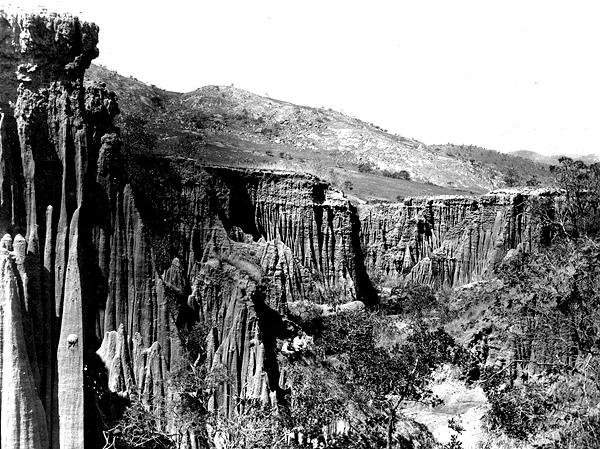
The tin miners were the worst. Mbabane was initially a tin mining village before it became the capital in 1902. Tin mining was very simple, they washed away the hillside to expose the nuggets of tin that lay above the bedrock. This meant that miners needed long canals to get enough water pressure  to hose away the hill.

It took until the 1950’s to stop their depradations. This accounts for a large amount of deep erosion gullies  as seen at Mlilwane Wildlife Sanctuary

The soil that was washed away tended to accumulate and create swamps or wetlands, polluting the rivers and streams with silt, killing cattle.

I remember the dams  and claybelts all around Mbabane. Playing in the dams was strictly forbidden as a few years before a child had drowned in Lake Adelaide. I recall my Dad telling of having to dive in to retrieve the body, which was tangled in reeds on the dam floor.

However our gang of young boys found an old raft of petrol drums with a deck of wattle sticks on a small dam which we couldn’t resist, and had an inspired  pirate game. Unfortunately one of the gang lost his pellet gun overboard there – we were too scared to dive for it.  I wasn’t too sorry as he had shot me in the leg once, possibly by mistake…

Below Mbabane Club there were a number of claybanks which saw many a clay fight. Fortunately we could wash some of the red clay off in the river afterwards.

We later moved to Havelock Mine nestled in the East Drakensberg Mountains in the north of Swaziland. As boys we roved the hills and mountains and found prospectors’ trenches and implements all over the area.

Tin, gold, asbestos, iron ore, coal, diamonds lured many who came to love the land and its people. But they have run out now, so the burgeoning population has to rely on other ways of selling their resources.

Overpopulation and a lack of planning and control of development is turning many areas into semi-desert. So sad.

Photos courtesy of Swaziland Digital Archives