
(This is an extract from my book “Rough Justice” which records some of my experiences in Rhodesia and Zimbabwe during and after the liberation war. –Available on Amazon)
Part of the strategy for combatting the war against terror, was the establishment of Special Courts, which travelled into rural centres to try offences against the Law and Order (Maintenance) Act.
Offenders were people who carried arms of war – active terrorists; those who gave aid and support to terrorists and / or failed to report the presence of terrorists, which were capital offences with a mandatory death sentence upon conviction.
The death penalty was a very strong part of the judicial armoury in Africa up to the 1970’s. As was corporal punishment – a light cane for juveniles and a heavy cane for adults.
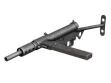 Judges’ Clerks were required to act as Chauffeurs and Bodyguards for our Judges and we were issued with Sten guns, 45 calibre sub machine guns, produced in WW2 for 2/6d, which usually jammed after the second round.
The best part was driving the big Mercedes Benz car merited by the judge.
The administration of Justice was very swift, with most of the accused admitting the facts, notwithstanding the mandatory death sentences and despite the efforts of their appointed defence barrister.
On one sad day we passed the death sentence on four people: two in Inyanga in the morning and two in the afternoon in Umtali.
After the accused were found guilty, it was the duty of the Judge’s Registrar to address them were as follows:
“You have been found guilty of the crime of contravening the Law and Order (Maintenance) Act by giving support to people bearing arms against the State: do you know of any reason or have anything to say as to why sentence of death should not be passed upon you?”
My repugnance for what we were doing grew after one dignified old gentleman replied: “My Lord, when a man bearing a rifle tells me I must report anyone who carries weapons who comes to my village or I will be hanged, and then later, another man also carrying a rifle tells me if I report his visit I and my family will be killed, what must I do?
He was duly sentenced as the Act required, but I know the judge recommended clemency. That evening was the only time I saw a judge get drunk.
He resigned after that.
In fact, most if not all mandatory death sentences which did not include murder or acts of violence were commuted to life imprisonment and these people were released on independence.

 metime last week Queensland news was filled with the successful busts by police of numerous marijuana growers who had rented suburban houses and converted them to grass growing hothouses. A number of serious statements were made about these heavy criminals.

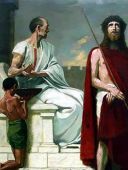 However, the attempts to evade responsibility for the decision to execute Jesus, suggest some uneasiness.
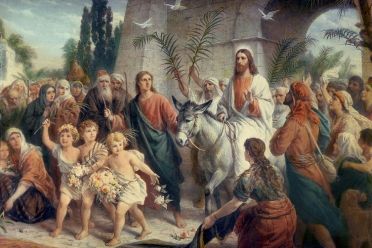 In the book of Zachariah it was written: “The Coming of Zion’s King – See, your king comes to you, righteous and victorious, lowly and riding on a donkey, on a colt, the foal of a donkey”. It suggests that Jesus was declaring he was the King of Israel to the anger of the Sanhedrin when he rode into Jerusalem on a donkey, to great popular acclaim.
 Now these are acts which are of a political consequence. Here was a potential challenge to existing authority. The claim to be the Son of God was surely false.
 fts by an African tyrant, did not even attract condemnation from the same military overlord who had installed the tyrant in years gone by.
 sillysocksonfriday