73 is a good number, but I am not there yet. Being but a step away is sufficient justification for self -indulgence.
Warmed by gentle signs of affection from the my nearest dearests and those afar, I feel free to indulge.
But, lest anyone think that I may neglect my responsibilities, I have done the washing up, emptied the bins, watered the flowers and inspected the lawn for dog poo (none); however, I did note it needs a cut – but not today!
To my delight I found a new scarlet amyryllis bloom, the second this season; a solitary deep red nasturtium smiled at me – I thought they were all done, and my birthday gardenia has spared me an extra bloom on the appropriate day.
On the kitchen bench are massed ingredients for the Christmas cakes baked by herself. Such a rich panoply: ginger, prunes, fig jam, candy peel, dates, apricots, currants, cherries, almonds to accompany the usual eggs, flour and milk, all stiffened with a cup or two of sherry and a dash of whisky to preserve it. Renowned as an invigorating health food the cake rarely makes the new year.
I had black berries and yogurt for breakfast and plan a mango soon. For lunch I will have a glass of wine (maybe two?) and some snorko’s (pork sausages, a little weakness of mine). Supper shall be feesh and cheeps at the Lighthouse.
Contrary to popular belief, the world is not falling apart
It’s easy to think that the world is falling apart. Media driven fear demoralises us – particularly when young – and engenders terrible political decisions
The necessary media spotlight on conflicts like Ukraine and Gaza gives the impression of unprecedented levels of violence – it’s not, it’s unprecedented media coverage of conflict and other horrible incidents like crimes and natural disasters. So much so that media channels seem to promote such scenes to maintain followings.
But wait, take a look at the data:
Last year, 3,5 in 100,000 people died in war, in the 20th Century, there was an average of 30 deaths per 100,000. The world has become far more peaceful.
The data speaks to the constant barrage of contextless catastrophe and doom. Negativity sells, but it informs badly.
The same pattern characterises the climate change reporting. A pervasive and apocalyptic narrative draws together every negative event, ignoring the data. Fires, for example: the annual global burned area has been declining for decades with last year being the lowest on record.
Deaths from famine and floods have declined almost 50 fold over the last century.
The world has improved dramatically:
Life expectancy has more than doubled since 1900;
the almost universal illiteracy of 200 years ago has almost disappeared;
in 1820, 80% of the world lived in extreme poverty, now it’s less than 10 percent;.
This incontrovertible progress has been driven by ethical and responsible conduct, trust, well functioning markets, the rule of law, innovation and political stability.
We need to foster a climate that challenges fear-mongering and promotes optimistic yet critical thinking and constructive discussion regarding the future.
The authors have convened the Alliance for Responsible Citizenship and their conference commences on 30 October in London. Follow the outcomes.
This is paraphrased from an article by
Jordan Peterson John Anderson The Weekend Australian 28 October 2023
This is the kind of talk you need to listen to. No doubt there will be muted and hypercritical media reporting on this movement – their methods, ethics and calling are under scrutiny, at last!
Generally speaking people feel uncomfortable objecting to something somebody says or saying “no”.
The desire for social acceptance and fear of causing disappointment or conflict lead us to agree, even when it’s against our best interests. Some of us were brought up with expectations of obedience. Saying “no” to a parent was exceptionally hard; an older sibling would likely give you a thick ear!
So we learned how to express our refusal: often by persistence, pleading, begging and tears. These tactics sometimes worked with Mum. Dad’s response was invariably: “what does your mother say?”
By saying No, I am challenging your power, intimating you are wrong and I am right, disappointing and inconveniencing you, embarrassing you.
The reluctance, discomfort and often fear of saying no is the playground of bullies. Standing up to our teacher, boss or parish priest is almost as difficult. But if successful, a “no” reaps rewards and enhanced respect.
The most challenging “No” of all, is the one you say after having said “Yes” many times before… when there is an expectation of “yes”
Hurt feelings, guilt, shame, embarrassment, sadness, anger and rage are common reactions to a refusal. Here in Australia, the rejection of the Voice referendum has seen all those emotions and more.
Saying no means we need to be able to discriminate – to be to tell the difference between different options and select the right one. We should also learn how to signal our position before being asked, if possible.
For some time I have been uncomfortable with the increasingly commonplace Aboriginal “welcome to country” ritual foisted on audiences; particularly the increased emphasis on this land being “ours”.
I believe it is commonplace before meetings in government departments and even in some churches.
These “welcomes” are not endearing Aboriginal cultural practices; they are in fact political statements which challenge the status quo in Australia.
High Court v Commonwealth 1993: … there is no justification for “the notion that sovereignty adverse to the Crown resides in the Aboriginal people of Australia”
The referendum message does not seem to have got through to the vociferous minority. The special treatment of people on the grounds of their ethnicity has been rejected.
Thirty percent of Australians today were not born here, they have different cultures – they are rightly expected to assimilate and contribute to our society.
The message is: You can say “No” to stuff you didn’t agree to, even the ‘touchy-feely ‘ ethnic and gender stuff.
Question the justification for unnecessary welcomes and cultural, ideological changes in your workplace.
Terror tactics are horrifying and repugnant causing us to recoil. They are used when conventional warfare: i.e. soldiers fighting soldiers, is not pragmatic.
The terror tactics used in Rhodesia during the time of its ‘liberation’ war included the murder of unarmed non-combatants in pitiless, gruesome fashion. This included the execution by shooting of headmen and many tribespeople “pour encourager les autres” accompanied by mutilations, abduction and rape. It included the execution of survivors of a passenger aircraft they had shot down; the murder of missionaries including the bayonetting of a 6 month old baby.
Of course, Europe had its own terrorists like the Red Army Faction which engaged in a series of bombings, assassinations, kidnappings, bank robberies, and shoot-outs with police.
Governments also use terrorism. In World War II, the Nazis executed villagers in reprisal for attacks on them by resistance partisans.
The Japanese Army is estimated to have executed millions of Chinese and Korean civilians during the same period.
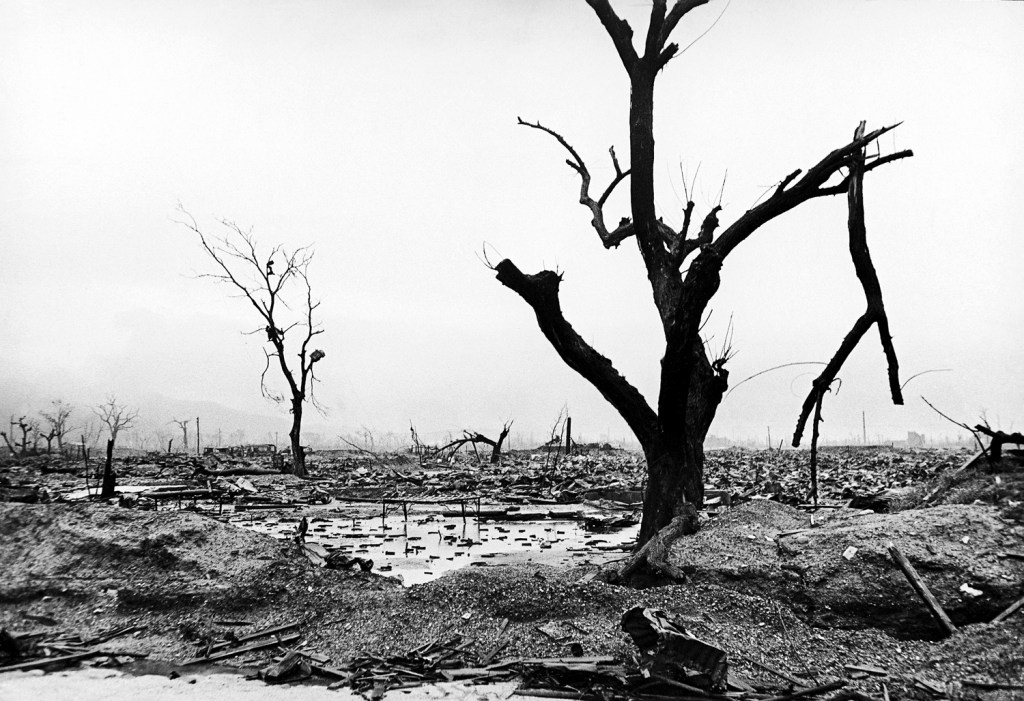
Let us not omit the ultimate terror tactic deployed by the US on Japan in 1945 – the atomic bombs on Hiroshima and Nagasaki which killed over 200, 000 people.
Neighborhood reduced to rubble by atomic bomb blast, Hiroshima, 1945.
Sadly, terror tactics clearly have some “legitimacy” in societies across the world.
This somewhat shatters our moral high ground when considering the Hamas massacres of Israeli residents and indeed the Israeli retaliation and the US support for it.
There is some distaste for the Hamas tactic of hiding amongst the “innocent” population, but it is a brutally clever tactic. Why should non-combatants not share the fight in a liberation struggle?
Of course, this type of thinking means that the only tactic to stop this type of warfare is eradication and suppression – obliteration will buy a few years until new ideologists fire up the youth of a new generation. Unavoidably, non-combatants will also be obliterated.
We can express our horror and repugnance, but we can not condemn the morality if we too are guilty.
It goes without saying that terrorists should be stopped before they attack.
But, how is this possible?
One answer which many will not like, is universal surveillance: the continuous monitoring of every meeting, conversation and movement of ….. everybody.
Don’t be alarmed, surveillance of communications and movement is commonplace in the military and security industries, including the police. Many private houses and vehicles already have security camera systems which track you whenever you pass by; you are watched in supermarkets, bars and train stations. Internet traffic is monitored and filtered by service providers.
Why do we still need a warrant to monitor criminal activities? AI bots can monitor and notify suspicious behaviour for investigation, in real time as it happens.
It will be far more effective in stopping terrorists and criminals than analysis of historical data, so what is the downside?
After all: “freedom’s just another word for nothing left to lose”!
I wrote this poem for a poetry class some years ago.
For some reason the word came up in a conversation with my daughter … and she laughed! We were talking about the Afrikaans word “windgat”, which is not a compliment and indicates someone who is loud, flashy and probably drives a car with two big exhausts.
We pondered on that; I was forced to admit that some years ago in South Africa, I was called a windgat* by colleagues at work. It was probably because I was a loudmouth and sometimes confronted their conventional awe of authority. Fortunately, I usually knew what I was talking about in industrial relations and in the land of the blind, the one-eyed man is king!
She asked what the English equivalent might be, so I Googled it.
given to rhetoric, emphasizing style at the expense of thought
That was why she laughed! She recognised me!
Bombast was the cotton padding used in clothing to make the wearer appear more substantial.
I do admit that I have a love of language and have been known to use big words and I avoid the banal like the plague – but I have never owned a car with big exhausts.
So, it is necessary for me to embrace and practice humility !
Banal is a strange word which I shunned in my younger days as it made me feel queasy somehow. Probably because of the -anal sound. But in fact its not ‘bay nal’,- it is pronounced ‘buh narl’, much more reflective and condemnatory sounding. Synonyms are: bland, corny, dumb, hackneyed, mundane, stupid, trite, vapid …
When your throat thickens, your heart falters then swells and your eyes prickle with tears – that is unalloyed joy.
My middle grandson gave me a cool stare then curled a grin and clasped my finger … and my heart!
In the middle of a slow Spring afternoon, reading on the patio with music in the background. Pavarottijust reached those sad, beautiful notes in Vesti la giubba, which clutched at me, leaving me breathless with its pathos.
Ridi, Pagliaccio, col tuo amore infranto! Ridi del duol, che t’avvelena il cor!
Laugh, clown, at your broken love! Laugh at the grief that poisons your heart!
Maybe that one was not joy but it was intense emotion!
Now I can’t remember the one which gave me such joy – damn!!
I thonk maybe it was the Vincero, vincero! in Nessun Dorma – have a listen and feel the joy!
Music often does that though. I still weep almost every time I hear Danny Boy:
But when ye come, and all the flowers are dying
If I am dead, as dead I well may be
You’ll come and find the place where I am lying
And kneel and say an “Ave” there for me.
And I shall hear, tho’ soft you tread above me
And all my grave will warm and sweeter be
For you will bend and tell me that you love me
And I shall sleep in peace until you come to me
Sadly this weekend there was no joy, unalloyed or at all, watching rugby….
It had been run over and was in agony, so I borrowed a pistol and shot it. There was no vet in a hundred miles and its back was clearly broken ….
That was really just a hard place. Someone else offered to do it, but I felt that it was my problem to resolve. So I did it.
It was the right decision, but the sickening feeling and the guilty relief occasionally stab my well being. Sweet Hector!
There is no real unscarred escape from hard dilemmas, other than mental preparation and a rational analysis of solutions. There must be acknowledgement that hurt will occur and that pain will endure for some time.
The difficult part is ensuring that feelings of guilt are voided by a sensible assessment and choice of outcome.
When a problem is shared, the pain is doubled…
If the solution is not shared and owned, recriminations can rear their head later with even more pain. Negotiation and the gaining of acceptance of others is an extremely delicate exercise, with horrific emotional pitfalls both in the solution and the forever after.
To say that one emerges stronger from a distressing dilemma may be true, but strength is probably not the right measure; wiser perhaps?
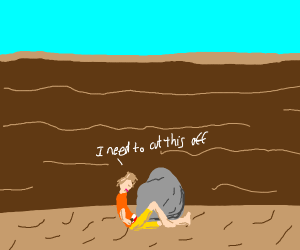
So next time your leg is pinned by a rock, don’t cut it off until you are sure there isn’t a handy lever nearby or passer-by who could lift it.
Life today is complicated: many components beset everyday problems. The modern politician has to find the courage and wisdom of Alexander to find a solution that is simple and easy to understand.
That’s the job – finding the right sword to cut the knot.
Brexit may be regarded as an Alexandian solution, not elegant but a simple severance. Covid has masked that track, so success will be hard to judge.
Here in Australia, my thoughts drift towards theVoice as a solution to Indigenous demands for attention and appeasement of the minority zealotry prevailing in the neo-liberal generation which has permeated our universities and subverted critical thinking.
It is an elegant, simple solution, devised to meet the short span of attention engendered by the memes, tropes and tweets of modern social media.
But the longer thoughts linger, supposedly simple solutions lose their lustre. It has a good chance of failure, which may require Albo to embrace the point of his sword as opposed to the blade. How sad!
Complexity and multiplicity of contributing factors cannot be ignored. Alexander could employ radical tactics, he was backed by the biggest, most succesful army in the world. Lesser mortals in democracies have to ensure majority support.
Putin in Russia frequently slashes through Gordian knots, even decapitating military threats … but the very fact that he perceives the need to do so suggests that there are greater problems.
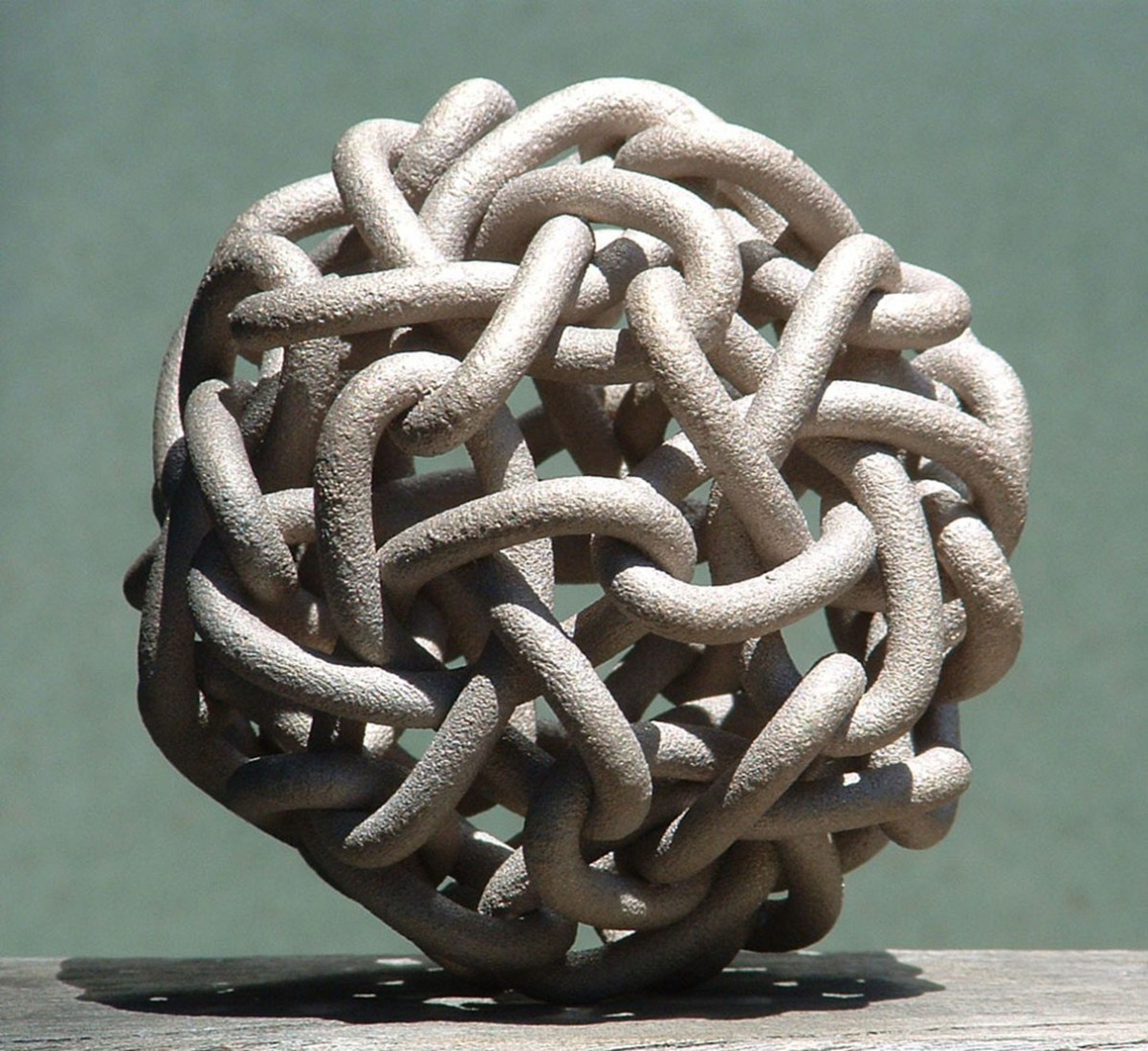
There is very rarely a simple solution to a complex problem, without some sort of magic, deception, smoke or mirrors..
Something Eddy Jones, the Wallabies coach knows and is trading on in the Rugby World Cup, starting tomorrow!!
The scent catches me: we seem to have had a bush in every house we lived in. Such a descriptive name: Vivid in youth, mild lavender in the middle, fading to white in old age.
Maybe life’s distinctions are not just good or bad, heaven or hell, one or zero, young or old.
Maybe it’s a triad that pervades: Id, Ego, Superego; discovery, knowledge, wisdom; experience, life, hope …
I love the music of the past; today’s music needs to age until familiarity brings content. The thing about the past is that we mostly recall the good stuff, which makes today joyful.
Its only when tomorrow becomes today and doesn’t bring joy do we interrogate the past to attribute blame. Of course, it is not so easy to get a clear picture of the past, because we tailor and garnish our memories. Each time they are taken out, they get a bit of a polish, so are usually changed from the original.
So many roads to follow – choice is rarely easy, unless it’s laissez-faire.
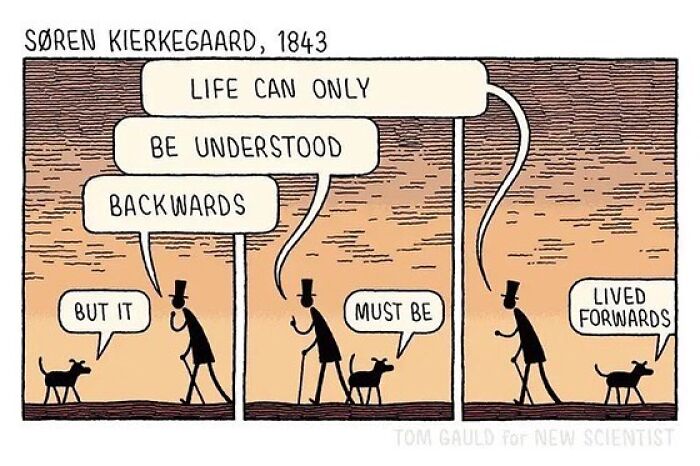
An idle thought (most of mine these days..) – focus in the past was sharp, it is a bit hazy today … tomorrow is an estimate.
Perhaps we should spend less time on the warm, familiar past and focus more on our future. Determination and tenacity are the best fuel in the pursuit of contentment. We determine today and step forward tomorrow, which always changes and needs ongoing determination.
So spend time today on sharpening your axe, start chopping tomorrow … but remember to do some sharpening each day.
When you are old, the awareness of the end of the road turns one’s mind to some sort of negotiation with the gods. FOMO is an abiding regret: will I see my grandson play 1st team or my grandaughters’ weddings .. balanced against the imperative of dying (easily and swiftly, of course) before any loved ones.
It is astounding how one seems to pick up speed and not notice how quickly the years pass as we near the bottom of the slope.
Goodness! I didn’t mean to lurch into the melancholy, I certainly don’t feel that; I was just trying to write anything but a rant!
It’s not the colours of the flowers so much as the scent that lingers and stirs the memory – like bacon!
I was thinking of another rant about the Woke Religion and its priests, the Voice and the courtesies we insist are paid to tyrants who we permit to flourish. But I have ranted about most of that already, so I need a change of tack.
We have too much tolerance.
We tolerate teenagers who steal and wreck the most expensive cars for Tik Tok kicks.
We tolerate demonstrators who burn and loot in their righteous displays of outrage.
We tolerate shoplifters because we are too scared to arrest them in case they create a victimisation scene.
We tolerate and compensate governments who suppress freedom, eliminate opponents and yet proclaim democracy.
We allow men claiming they are women to enter womens’ prisons despite convictions for rape of females
We give girls drugs to stop their sexual development and allow them to have their breasts removed, sometimes withhout parental consent.
We tolerate the mass murderers we catch, providing lifetime accommodation in our prisons.
We shoot mad dogs and any dangerous animal.
We also train soldiers in ways to efficiently kill people our governments declare are enemies; often in cold blood.
My recommendation is that we re-institute the death sentence for murderers and serial rapists.
Their places in our prisons can be filled by those who wilfully damage property.
We must also stop meeting tyrants and refuse them entry into our world.
I believe that the deterrent effect of capital punishment for terrible crimes will reverberate and reset the respect for societal values that has disappeared.
















 sillysocksonfriday