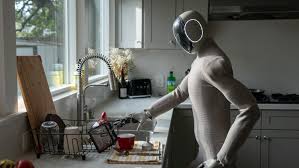
It’s a hard life!

Well …. it was at first...!

Now ….

I live in my own house in Australia. I have a wife, have enough to live on and save and no debts. My children and grandchildren all live in Australia, most within an hour’s drive.

We celebrate occasions and braai together frequently.

I am 73 years old and despite creaks and groans, not chronically ill.

In the past year I have consulted a doctor, cardiologist, and a nuclear radiologist. I have also seen a podiatrist, dentist, and a chiropractor. In addition, I have seen a phlebotomist and a physiotherapist. I visited some of these professionals more than once. All at no cost or subsidised fees.

My doctor at my last medical check-up said: If I had these results I would be dancing every day!

As a pensioner I receive subsidies for electricity and rates from the State. Any public transport costs 50 cents a trip.

In the event of an accident, I will be fetched by an ambulance and treated in hospital at no cost. Most operations and hospital visits are free for me.

If I need a carer in the future, the State will cover most of the costs. Alternatively, they will subsidise costs of a care home.

They may even send someone to mow the lawn.

You will note the absence of a mental health professional in the list. That is because I am wise and sane. I can remember nearly everything! But that service is subsidised too, if required!

I am profoundly grateful for my good fortune. We are truly blessed!

I am haunted by my heritage, which remains an ache but know that we did the right thing.

But there are snakes, spiders and jellyfish and slimy politicians here …. I tell you: it’s a hard life!

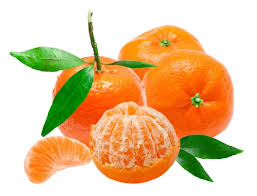
Naartjies

I am sentimental, I know… but I can’t call them mandarins.

It’s like barbeque is not the right word and I think that those who say it are ‘n bietjie skeef!

For some reason, I have always felt that naartjies are quintessentially South African. I am quite happy for non-Africans to call a similar fruit mandarins … they aren’t really naartjies.

The thing about naartjies is they are so easy to peel and the peels are so bright and pretty they don’t really matter when discarded on the roadside.

They are lekker sweet and it’s easy to eat a whole bag without thinking.

The current Lions Tour prompts a memory from schooldays. Our Rugby coach and Geography teacher was an Irishman, Rick Hamilton, from Ulster – a surprisingly nice man notwithstanding. In 1968 the Lions played Eastern Transvaal in Springs. It was a mid-week game and Rick organised for the school First Rugby XV to attend.

It was about a six hour trip each way, so we had to leave early in the morning. The main manne sat in the back row. It was possible to duck down there and have a smoke if the windows were kept open. The masters sitting up front pretended not to notice.

I remember some of the songs we sang: She’ll be coming round the mountain (clean version), I am a rock, America, Sounds of silence, (Simon and Garfunkel were big then) Blowing in the wind, Catch the wind

We eventually arrived. Most of us were country boys so the big crowd and the grandstand were awe inspiring.

Standard rugby fare was biltong and naartjies. We had great admiration for some enterprising Springs High boys. They were slinging naartjies up over the back of the grandstand, dropping them on unsuspecting spectators from another school… Impressive!

Can’t remember the score but it was a wonderful experience, despite 12 hours in the bus. They had even kept some dinner for us back at school.

Eish Boet! It’s lekker to braai boerewors to go with mielie bread or mielie pap. Other than biltong and bakkie not many more words have followed us across the Indian Ocean. But there are a lot of Saffas in Australia! Last time the Springboks played in Brisbane there were twice as many more green jerseys than yellow ones.

Mind you, amongst fellow Africans there is a lot of kak praat and no-one gets gatvol.

Isn’t it astounding that South Africa produces so many world sports champions!

I believe Rassie has worked miracles in giving South Africans a common pride in their country. At last week’s rugby test against Italy in Cape Town, white supporters were a minority. I have never seen that before!

I reckon it’s something to do with a steady diet of biltong, boerewors and koeksisters!

Midwinter detour

Well, the birds are courting and building nests here in Australia and Bauhinia are flowering, so we are nearly into Spring.

I found it boring to speculate further about the revolution and rise of fascism in the US. My raging against the woke manias was becoming vaguely repetitive. (I mean, even Jordan Petersen gets a bit much after a while..)

It being Friday, I decided to write about something else. Thank you TED Talks for reminding me of my other favourite interest: the future.

In a Talk about training a butler robot called Neo at home, an important point emphasized : Diversity generates Learning.

It seems that factory training led to robotic expertise in a few skills but not a growth in abilities. Using a home environment to train robots proved to be a good training context.

It seems that already millions are using Replika an app that lets you create AI friends. The developer highlights the dangers that this sort of app can increase the widespread addictions to mobile phones and social media. She urged the development of a metric which emphasized flourishing as opposed to mere engagement or ‘clicks’.

I have written before about AI companions. Woebots are chatbots provide online cognitive behaviour therapy. Digital ghosts are AI-generated avatars of deceased loved ones. Robotic pets respond to voice commands. They provide calming conversations for dementia patients…

The bottom line with all of these ‘helpful’ technologies is moderation and questioning. AI must always be tested before acceptance.

The pampering of pets

The other day a wise woman said to me that the amount of money squandered on the pampering of pets is scandalous.

This scratched an irk that has been lurking in my mind for some time.

This irk was concretised by a recent article in the Summer 2025 issue of American Affairs by Peter Pilkington called The Limits of Consumption: Why Consuming More Makes Us Poorer.

It is quite heavy reading! What it said to me was:

We are told year in and year out that living standards are rising, but many people—especially younger people—can feel their quality of life decline as time goes on.

  • quality of life is degrading as GDP increases, i.e. many are getting poorer and some disgustingly richer
  • consumers are spending too much money on valueless crap
  • education, health and housing industries have been artificially inflated to extract more money from consumers.

In the US since 2011, the number of housing units per person stayed roughly constant at around 0.425 – that suggests there should be enough houses.

But average household price has risen by 85% !!

Non economic measures show a large decline in quality of life in recent years, but economic metrics show it is increasing.

It is time for economists to admit that their metrics are broken

Basing the economic health of people is based on outdated calculations

Big Pharma, Real Estate tycoons and Universities have found the keys to manipulating governments for money. They inflate their markets. This results in higher prices that consumers must now pay.

  • consumers have lost their ability to see real value
    • corporations manipulate governments to provide funding as economic policy
  • white collar information workers are non-producing and increasing, while blue collar workers, who actually produce are disappearing
  • large, entrenched and empowered DEI inspired bureaucracies
  • the lack of willingness in politicians to challenge entrenched practices and bureaucrats
  • ruthless production and marketing of valueless goods